Ecological Homeostasis

Are We Short of Water and Food ??

http://www.lovinghut.com/
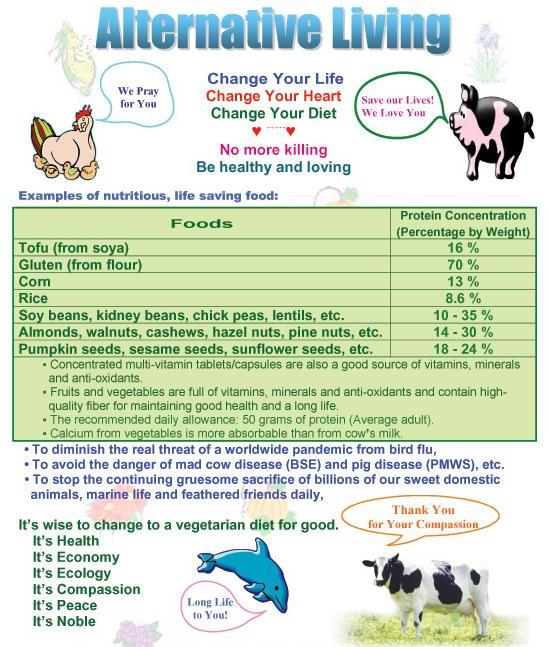
Since the vegetarian diet is the most effective solution to global warming, under Supreme Master Ching Hai's guidance, members of The Supreme Master Ching Hai International Association recently opened a chain of Loving Hut vegetarian restaurants around the world, in the United States, Japan, Indonesia, Au Lac and Formosa. These places provide affordable and high-quality vegetarian delicacies to the public, bringing a positive impact on the food and beverage industry...
Meat or vegetables? Independent online (SA)
A recent study has revealed that giving up meat could drastically reduce one's carbon footprint. A diet with meat is responsible for producing in a year (as many) greenhouse gases as driving a mid-sized car for 4,758 km, the Institute for Ecological Economy Research (IOeW) said last week. But the food a vegetarian consumes in (the same period of time) is responsible for generating (gases only) as driving for 2,427km, the IOeW said in a study commissioned by independent consumer protection group Foodwatch...
Vegetarian Shoes And Bags
The term pleather ("plastic leather") is a slang term for synthetic leather made out of plastic, a portmanteau of plastic and leather, the term can be either descriptive, or derogatory, depending upon the user (the derogatory use implies use as a substitute for genuine animal hide leather to cut costs)...

From All Corners of the Galaxy

Which Stars Are You From?
  • Galactic Highway - The Wormhole
  • Wormholes are a valid consequence of Einstein's general relativity view on the universe. A wormhole, in theory, acts as a shortcut or tunnel through space and time. There are several versions on the same theme (i.e. wormholes may link different universes; they may link the two separate locations in the same universe; they may even link black and white holes together), but the physics is similar, wormholes create a link two locations in space-time, bypassing normal three dimensional travel through space. Also, it is theorized, that matter can travel through some wormholes fuelling sci-fi stories like in the film Stargate or Star Trek: Deep Space Nine.

    If wormholes do exist however, it is highly unlikely that you'll find a handy key to open the mouth of a wormhole in your back yard, they are likely to be very elusive and you'll probably need some specialist equipment to travel through them (although this will be virtually impossible).

    Alexander Shatskiy, from the Lebedev Physical Institute in Moscow, has an idea how these wormholes may be observed. For a start, they can be distinguished from black holes, as wormhole mouths do not have an event horizon.

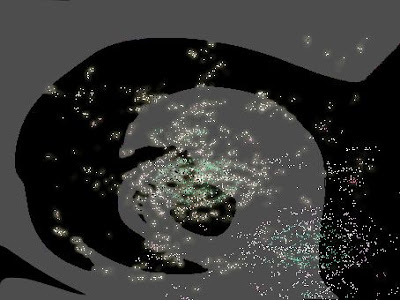
    Secondly, if matter could possibly travel through wormholes, light certainly can, but the light emitted will have a characteristic angular intensity distribution. If we were viewing a wormhole's mouth, we would be witness to a circle, resembling a bubble, with intense light radiating from the inside "rim". Looking toward the center, we would notice the light sharply dim. At the center we would notice no light, but we would see right through the mouth of the wormhole and see stars (from our side of the universe) shining straight through.

    Source:http://www.universetoday.com/

  • Stream of Time
  • Plato argued that time is constant - it's life that's the illusion. Galileo shrugged over the philosophy of time and figured out how to plot it on a graph so he could get on with the important physics.

    Albert Einstein said that time is just another dimension, a fourth one to go along with the up-down, side-side, forward-back we move through every day. Our understanding of time, Einstein said, is based on its relationship to our environment.

    Weirdly, the faster you travel, the slower time moves. (Is it truely weird? Not quite!!) The most radical interpretation of his theory: Past, present, and future are merely figments of our imagination, constructs built by our brains so that everything doesn't seem to happen at once.

    Source: http://www.socialtext.net/

Showing posts with label Healthy Vegan. Show all posts

2008-12-29

Vegetarian (or Vegan) Diet, the Most Effective Way to Stop Global Warming

"Don’t eat meat, ride a bike, and be a frugal shopper -- that’s how you can help brake the global warming." – Dr. Rajendra K. Pachauri, Chairman, Intergovernmental Panel on Climate Change (IPCC), Paris, January 15, 2008

There are numerous ways that are commonly known to reduce carbon dioxide emissions:
  • reducing fossil fuel usage;
  • engaging in renewable energies such as solar or wind power;
  • reducing, reusing and recycling everyday items;
  • driving a fuel-efficient or alternative energy car;
  • using energy-saving electronics, and others.
Yet the most powerful way to stop global warming is to adopt a vegetarian (or Vegan) diet!

Water
consumption in generating one kilo of food in US

animal-based agriculture


1 kg of meat


Water (liter)


Beef


1,000,000


Chicken


3,500


Soybean


2,000


Rice


1,912


Wheat


900


Potato


500


(Source: http://www.godsdirectcontact.org.tw/eng/news/194/ht_32.htm)

In a press conference on January 15, held by the Intergovernmental Panel on Climate Change (IPCC), the head of the IPCC, Dr. Pachuari warned that if the human race doesn’t act now, “climate change will have serious impacts.” He also clearly stated that the way to halt climate change is to stop eating meat, and make a change to a greener lifestyle.

The United Nations’ report on livestock and the environment published in 2006 revealed that, “The livestock sector emerges as one of the top two or three most significant contributors to the most serious environmental crisis, at every scale from local to global.” Almost a fifth (20 percent) of carbon emissions come from livestock - that’s more emissions than from all of the world’s transportation combined!

Industrialized animal-based agriculture is “astonishingly” the main cause of environmental destruction and greenhouse gas emissions.

Raising animals for food is one of the largest sources of carbon dioxide and the single largest source of both methane and nitrous oxide emissions. The livestock sector accounts for 9 percent of carbon dioxide, 65 percent of nitrous oxide and 37 percent of methane produced from human-related activities. Both methane (20 times) and nitrous oxide (296 times) are considerably more potent greenhouse gases than carbon dioxide. Livestock also generates 64 percent of human-related ammonia, which contributes to acid rain.

It is also a major source of land and water damage and pollution. Livestock currently use 30 percent of the Earth’s land surface, and even more land and water is used to grow the feed for livestock. According to Mr. Steinfeld, the senior author of the Food and Agriculture Organization report, Livestock’s Long Shadow–Environmental Issues and Options, livestock is the “major driver of deforestation … some 70 percent of former forests in the Amazon have been turned over to grazing.” In addition, animal-based agriculture causes land degradation. About 20 percent of pastures are degraded through overgrazing, compaction and erosion. It is also responsible for vast water consumption and pollution. In the USA alone, trillions of gallons of irrigation water is used to grow crops to feed animals annually. This is about 85 percent of the USA’s fresh water resources. Animals also generate excessive amounts of biological waste for the ecosystem to take.


read more...

2008-10-29

Why Vegan ?

Berry Chocolate Muffins ~ Vegan, Dairy-Free, Egg-Free, AND Wheat-Free
1 Cup Orange Juice
1/2 Cup Oil
1/2 Cup Dark Brown Sugar, Packed
1/2 Teaspoon Salt
2 Cups Light Spelt Flour (or Whole Wheat Pastry Flour)
1 Teaspoon Baking Powder
1/2 Teaspoon Baking Soda
1/2 Cup Rolled Oats
1/4 Cup Dutch-Processed Cocoa Powder
1/4 Teaspoon Cinnamon (Optional)
1/2 Cup Fresh Red Currants
1/2 Cup Raspberries
1/2 Cup Semi-Sweet Chocolate Chunks or Chips


Why Vegan?

Veganism may be defined as a way of living which seeks to exclude, as far as possible and practical, all forms of exploitation of, and cruelty to, animals for food, clothing or any other purpose. In dietary terms it refers to the practice of dispensing with *all* animal produce - including meat, fish, poultry, eggs, animal milks, honey, and their derivatives.

Abhorrence of the cruel practices inherent in dairy, livestock and poultry farming is probably the single most common reason for the adoption of veganism, but many people are drawn to it for health, ecological, spiritual and other reasons.

"Land, energy and water resources for livestock agriculture range anywhere from 10 to 1000 times greater than those necessary to produce an equivalent amount of plant foods. And livestock agriculture does not merely *use* these resources, it *depletes* them. This is a matter of historical record. Most of the world's soil, erosion, groundwater depletion, and deforestation -- factors now threatening the very basis of our food system -- are the result of this particularly destructive form of food production" (Keith Akers, p. 81, "A VEGETARIAN SOURCEBOOK", 1989).

Vegan: excludes animal flesh (meat, poultry, fish and seafood), animal products (eggs and dairy), and usually excludes honey and the wearing and use of animal products (leather, silk, wool, lanolin, gelatin...). The major vegan societies all disallow honey, but some "vegans" still use it.

What's Wrong With Free Range Eggs?

In order to get laying hens you have to have fertile eggs and half the eggs will hatch into *male* chicks. These are killed at once or raised as table birds (usually these days in broiler houses) and slaughtered as soon as they reach an economic weight. So for every free-range hen happily scratching around the garden or farm who, if she were able to bargain, might pay rent with her daily infertile egg, a corresponding male from her batch is enduring life in a broiler house or has already been subjected to slaughter or thrown away to die.

Every year in Britain alone more than 35 million day-old male chicks are killed. They are mainly used for fertiliser or dumped in landfill sites. The hens are also culled as soon as their production drops. Also be aware that many sites classed as free range aren't really free range, they're just massive barns with access to the outside. Since the food and light are inside the chickens rarely venture outside.


What Can Be Substituted For Eggs?
  • Ener-G Egg Replacer, which is make from potato starch, tapioca flour, leavening agents (calcium lactate (vegan), calcium carbonate, and citric acid) and a gum derived from cottonseed. It's primarily intended to replace the leavening/binding characteristics of eggs in baking, but it can be used for nonbaked foods and quiches.
  • Alternative replacements (quantity per egg substituted for) 2 oz of soft tofu can be blended with some water and substituted for an egg to add consistency.
  • Or try the same quantity of: mashed beans, mashed potatoes, or nut butters.
  • 1/2 mashed banana
  • 1/4 cup applesauce or pureed fruit
  • One Tbsp flax seeds (found in natural food stores) with 3 Tbsp water can be blended for 2 to 3 minutes, or boiled for 10 minutes or until desired consistency is achieved to substitute for one egg.
  • 1 tsp. soy flour plus 1 Tbsp. water to substitute for one egg.
What's Wrong With Dairy Products?

Dairy cows are made pregnant yearly to ensure they produce adequate milk. In nature the calf would suckle for almost a year but nature, like the calf, is denied by the dairy industry.

Some calves may be separated from their dams on the first day of life; others might remain for just a few days. But as the inevitable by-products of relentless milk production each will have to endure one of several possible fates.

The least healthy bobby calves will be sent to market to be slaughtered for pet food; to provide veal for veal & ham pies; or for rennet to be extracted from their stomachs for cheesemaking.

Some females will be reared on milk substitutes to become dairy herd replacements and begin, at 18-24 months of age, the cycle of continual pregnancies.

Some will be sold at market at 1-2 weeks of age for rearing as beef in fattening pens and slaughtered after 11 months, often without sight of pasture.

Up to 80% of the beef produced in the UK is a by-product of the dairy industry. Over 170,000 calves die in the UK each year before they are three months old, due largely to neglectful husbandry and appalling treatment at markets.

A few will be selected for rearing as bulls, spending their lives in solitary confinement serving canvas 'cows' and rubber tubes. Artificial insemination is now responsible for 65-75% of all conceptions in the dairy herd.

In the US the vast majority of unwanted calves are reared for veal, all but around 12% of them spending their short miserable lives in narrow crates (5'x2') on wooden slats and without straw.

Whilst none suffer such a fate in Britain they are now exported for the purpose. In solitary confinement, unable to turn around or groom themselves they must drink the only diet they are allowed - a milk substitute gruel.

Deliberately kept short of the iron and fibre which would redden their fashionably white flesh, they will suffer from sub-clinical anaemia and gnaw at the crates and their own hair for the roughage they crave.

Fed large doses of hormones and antibiotics to promote growth and prevent the onset of infections caused by the stress of confinement and malnutrition, they will suffer scours, pneumonia, diarrhoea, vitamin deficiency, ringworm, ulcers or septicaemia.

After 14 weeks, barely able to walk, they are taken over long distances to slaughter.

In 1905 the Lord Mayor's Cup at the London Dairy Show was won by a 24 year old cow.

Today it is impossible to find a dairy cow of that age. The cow is usually sent for slaughter at five to six years, less than one quarter of their expected lifespan.

Ketosis, laminitis, rumen acidosis, bse, mastitis, milk fever, staggers, liverfluke, lungworm and pneumonia are just some of the diseases facing the short life of the dairy cow.

But Don't I Need Eggs And Dairy Products?

Just as the meat manufacturers would have you believe that you need to eat meat, the egg and dairy producers are now spending vast amounts of money promoting the healthy aspects of eggs and dairy products.

Eggs and dairy products contain large amounts of cholesterol and saturated fats, which is considered a major cause of heart disease.

In a 1985 study published by the J. Am. Med. Ass. dairy products were the major source of saturated fat and cholesterol for 75 adult vegetarians living in the USA, whose blood levels of cholesterol were higher than those of vegans who ate no dairy produce.

Dairy products contain lactose, a milk sugar which the majority of the world's population is actually unable to digest and is often found to be the cause of digestive problems.

Casein, the milk protein, has been shown to cause iron deficiency anaemia from internal bleeding in many infants and is suspected of causing juvenile diabetes.

Milk products can also be a cause of eczema, rash, mucous buildup, wheezing, asthma, rhinitis, bleeding, pneumonia and anaphylaxis in children and adults.

(Source: http://www.godsdirectcontact.com/, http://site.maggiescottage.com/; image by: http://blog.mysweetvegan.com/)
read more...

2008-10-24

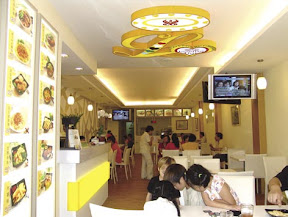
Loving Hut Taipei Guangfu Store Grand Opening on Saturday, Oct. 25

Loving Hut was created with a vision that all beings could live in peace, love and harmony with each other and the planet. Loving Hut chain restaurants are newly opening around the world. It is an invitation to gourmet international cuisine at a great price that is all animal-free made and made with wholesome vegan ingredients offering an accessible starting point for those who want to make the noble transition to a plant-based diet.

At Loving Hut, all dishes are prepared free of animal ingredients (vegan) and served lovingly, in a graciously decorated, pure and peaceful environment, giving one a heavenly feeling.

Loving Hut is currently the fastest growing International vegan fast food chain in the world. The first Loving Hut in the United States was opened in July 2008 in the heart of Silicon Valley, California.

Numerous branches are currently being opened in Formosa (Taiwan), one in Au Lac (Vietnam) and Hong Kong. More branches will be opening in various locations all around the world in the coming months.

In an effort to reduce our environmental impact, all waste is recycled or composted whenever possible and 'TOGO' packaging is made out of recycled or post consumer environmentally friendly materials.

As more and more people around the world adopt a plant based diet, Loving Hut is a beacon of light for an alternative way of living. It’s healthier, it’s compassionate, it’s peaceful and it’s the only way to a sustainable planet.

Latest News from LovingHut.com:

Taipei Guangfu Store Grand Opening on Saturday, Oct. 25.

Five-star chef's specialties includes:
Skewered BBQ, various Hot Pots, and Hot Pot Combos which includes
One Hot Pot with Anka Rice , Skewered BBQ, Dessert, and One Drink.

Hot Pot Only Menus: (for NT$150)

Other than the Chinese Herbal Style, "From the Sea" Style, Thai Style, Szechwan Style, Tomato & Veggie Style, the store has added brand-new Coconut Pumpkin Style, Sesame Mushroom Style, Korean Style, and Creamy Soy Style for all its connoisseurs of fine food and drinks.

The reception starts at 9:00 AM and the Grand Opening ceremony will be from 9:30 AM to 11:30 AM.

By Taipei Metro:

Take the Blue Line to Sun Yet-Sen Memorial Hall Station.   After exiting the #2 Exit, turn right on the 3rd lane (Lane 280).    It's located couple of stores down on your right-hand-side.

Tel: 02-2777-2711
Fax: 02-2777-2737
Addr: No.30, Lane 280, Guangfu S. Rd., Da-an District, Taipei City 106, Taiwan (R.O.C.)
Web: http://www.lovinghut.com/tw/Loving_Hut_Location_13.htm

Also See: http://www.lovinghut.us/links.html for more information.
read more...

2008-10-14

Kid-Friendly VEGAN Recipes

by Kelly Leahy
If you are committed to becoming one of the "Vegans" or simply looking for ideas for meat free meals, it can be hard to convince the rest of the household to go along with you. Pint-sized picky eaters will turn their noses up at tofu chunks or just about anything that looks unfamiliar.

Fortunately the internet is there to help. There are plenty of tasty kid-friendly recipes that don't call for any animal products what-so-ever.
Vegan Sloppy Joes - This recipe uses tempeh instead of ground beef to add protein and texture to the filling.
Go Middle Eastern - One night make falafal with a side of hummus. Any leftover hummus can be packed for lunch the next day with veggie sticks.

Asian Confetti Rice - This dish provides a colorful option for your kids. It is chock full of vegetables and whole grains.

Baked Tofu Nuggets with Sweet Potato Fries - This recipe won't fool your kids into thinking they are eating chicken nuggets but the shapes might be familiar enough to create a new favorite.
(Source: http://www.greendaily.com/; image by: http://www.veganhealth.org/articles/realveganchildren)
http://vegkitchen.com/kid-friendly-recipes.htm

Eight Easy Ways to Get Your Family to Eat Vegetables
By Cathe Olson

There are children who devour plates of crunchy salads and gobble up steamed broccoli, like it was candy, but what do you do if your kids refuse to eat anything green?

Children need the vitamins and minerals vegetables provide. Vegetables from the Cabbage Family are exceptional sources of calcium, vitamins A and C, and beta-carotenes, especially kale and collards.

Most kids (and many adults) don’t like the strong taste and texture of these leafy green vegetables. Rather than trying to get your child to eat food she doesn’t like, fix the vegetables in a way that she will enjoy. Don’t load your child’s plate with huge helpings that may be overwhelming. Give him a little and let him ask for more.

Encourage your child to taste each dish but don’t force her to eat more if she doesn’t like it. Best of all, set a good example. If you are eating healthy, chances are your children will also.

Grow Them

Even a small plot or a few containers will work. If you haven’t gardened before, choose plants that are easy to grow and provide a big yield, like green beans, zucchini, lettuce, kale, or tomatoes. Let your child pick out the seeds and help with the planting, watering, and harvesting. Last summer, my two-year-old daughter would beg for a green bean every time we walked past the garden.

Mince Them

A food processor is a great investment. It can puree baby food, mix up cookie dough, and mince heaps of vegetables in seconds. Place washed and dried greens, cabbage, broccoli, carrots, etc. in your food processor with the metal blade and chop very fine. Minced vegetables can be added to soups, rice, mashed potatoes, spaghetti sauce, pesto, pizza, pasta dishes, scrambled eggs, egg, potato or pasta salads - just about anything. Add them to food you know your family likes. They’ll hardly notice a taste difference. Once vegetables are minced, they will keep only a few days in the refrigerator. No problem - make a big batch and freeze it. Lay the minced vegetables on a baking sheet and place in freezer. After a couple of hours, transfer to a freezer container. They will keep frozen for months. Just take a handful out anytime you need it.

Dip Them

Kids love to dip things. Give them raw or steamed carrots, celery, bell peppers, cucumber slices, zucchini, broccoli, and cauliflower. Use hummus, salad dressing, cream cheese, peanut or almond butter, tahini, yogurt, mayonnaise, cottage cheese, pureed tofu with herbs, or even ketchup for dipping.

Top Them

Sprinkle a little grated cheese on your child’s vegetables and watch them disappear. Even a little butter or sesame oil can make a big difference. When I was young, my Mom’s crumb topping was such a hit, my siblings actually fought over brussel sprouts. Crumb Topping: Melt 2 tablespoons butter or olive oil and mix in 1/2 cup breadcrumbs. Crumble over vegetables.

Puree Them Into Soups

If your children won’t eat chunks of vegetables in their soup, puree it in your blender or food processor. Try blending your favorite vegetable, bean, or chicken soups. You’ll be surprised how delicious they taste. My kids call them smoothie soups and like to drink them from a cup. Pureed soups are a soothing way to nourish a sick child who doesn’t want to eat.

Bake Them

Bake Zucchini Muffins, Squash Bread, Carrot Cake, Pumpkin or Sweet Potato Pie using whole grain flour and a small amount of honey, maple syrup, or sugar to sweeten. Try savory goodies like Broccoli-Cheese Muffins or Zucchini Cornbread. Add minced veggies to bread, pizza crusts, rolls, muffins, etc.

Add Them to Burgers

Another great way to use minced veggies is to mix them into tofu burgers or a bean/nut loaf. Make veggie burgers from whole grains and vegetables. Eat them like regular burgers with all your favorite trimmings. Quick Veggie Burgers: Mix 2 1/2 cups cooked rice or millet with 1 grated carrot, 1/2 cup minced kale or collards, 1 beaten egg, 2 tablespoons sesame seeds, 1 teaspoon soy sauce or 1/2 teaspoon salt, and 1/4 teaspoon black pepper. Mix thoroughly by hand. Add a little water or breadcrumbs if necessary to get them to stick together. Shape into patties and fry in small amount of oil until both sides are brown and crisp. Burgers can also be baked at 400 on an oiled baking sheet about 10 minutes per side.

Drink Them

Vegetables in smoothies? You won’t even taste them. Try this combination - I call it the Everything Smoothie: Place 1 1/2 cups apple juice, 1/2 apple (cored and sliced), 1/2 orange (peeled), 1/2 raw sweet potato or 1 carrot (sliced), 1/4 cup chopped kale or cabbage, 1 banana. Puree together. Makes 2 to 3 servings.

Cathe Olson is the author of Simply Natural Baby Food and The Vegetarian Mother’s Cookbook For more information and sample recipes, visit Cathe at Simply Natural Books.

read more...

Search This Blog

Blog Archives - Icons by: FastIcon.com