



A Global Projection of Subjective Well-being: A Challenge to Positive Psychology?
By Adrian G. White, University of Leicester
Rarely in recent years has a development in the field of academic psychology captured such widespread attention as the current developments in positive psychology on the topic of happiness.
Whilst academic investigation of something as intangible as happiness may seem at first surprising the age -ong search for happiness, a primary motive of human behaviour, has ensured a broader audience than psychologists usually attract.
The search for happiness is not new and neither is academic interest in the topic.
In 1776 the American Declaration of Independence argued for "certain inalienable Rights, that among these are Life, Liberty and the Pursuit of Happiness."
As such, nations have been formed on the basis of the search for happiness, and this desire has been put on a par with the right to life and the right to freedom.
In the U.K. interest in happiness was brought to widespread attention with the moral philosophy of Jeremy Bentham (1789) who argued that the purpose of politics should be to bring the greatest happiness to the greatest number of people....
(Source: http://www.le.ac.uk/)
Denmark: "The happiest place on earth"-- If it is happiness you are seeking, a move to Denmark could be in order, according to the first scientist to make a world map of happiness.
Adrian White, from the UK's University of Leicester, used the responses of 80,000 people worldwide to map out subjective wellbeing.
Denmark came top, followed closely by Switzerland and Austria.....
A nation's level of happiness was most closely associated with health levels.
Prosperity and education were the next strongest determinants of national happiness.
Mr White, who is an analytic social psychologist at the university, said: "When people are asked if they are happy with their lives, people in countries with good healthcare, a higher GDP (gross domestic product) per capita, and access to education were much more likely to report being happy."
(Source: http://news.bbc.co.uk/)
The 20 happiest nations in the World are:
1 - Denmark
2 - Switzerland
3 - Austria
4 - Iceland
5 - The Bahamas
6 - Finland
7 - Sweden
8 - Bhutan
9 - Brunei
10 - Canada
11 - Ireland
12 - Luxembourg
13 - Costa Rica
14 - Malta
15 - The Netherlands
16 - Antigua and Barbuda
17 - Malaysia
18 - New Zealand
19 - Norway
20 - The Seychelles
Other notable results include: 23 - USA, 35 - Germany, 41 - UK, 62 - France, 63 - Taiwan, 82 - China, 90 - Japan, 125 - India, and 167 - Russia.
(Source: http://www.physorg.com/)
Ecological Homeostasis
Are We Short of Water and Food ??
- Meteorite Asteroid Impact On Earth Doomsday 2012
- Nasa Climate Report
- Dr. Rajendra Pachauri, Chief of UN IPCC on a Win-Win Situation for the Planet: Go Vegetarian!
- 20 Questions About Vegetarianism
...Excess protein consumption can cause a variety of problems including bone mineral loss, kidney damage, and dehydration. Your body can only use so much protein, the excess is either broken down through oxidization, placing an enormous strain on the kidneys, or it is stored as body fat. Neither option is particularly desirable...
 http://www.lovinghut.com/
Since the vegetarian diet is the most effective solution to global warming, under Supreme Master Ching Hai's guidance, members of The Supreme Master Ching Hai International Association recently opened a chain of Loving Hut vegetarian restaurants around the world, in the United States, Japan, Indonesia, Au Lac and Formosa. These places provide affordable and high-quality vegetarian delicacies to the public, bringing a positive impact on the food and beverage industry...
 Meat or vegetables? Independent online (SA)
A recent study has revealed that giving up meat could drastically reduce one's carbon footprint. A diet with meat is responsible for producing in a year (as many) greenhouse gases as driving a mid-sized car for 4,758 km, the Institute for Ecological Economy Research (IOeW) said last week. But the food a vegetarian consumes in (the same period of time) is responsible for generating (gases only) as driving for 2,427km, the IOeW said in a study commissioned by independent consumer protection group Foodwatch...

 Vegetarian Shoes And Bags
The term pleather ("plastic leather") is a slang term for synthetic leather made out of plastic, a portmanteau of plastic and leather, the term can be either descriptive, or derogatory, depending upon the user (the derogatory use implies use as a substitute for genuine animal hide leather to cut costs)...
From All Corners of the Galaxy
 Which Stars Are You From?
- Galactic Highway - The Wormhole
- Stream of Time
Wormholes are a valid consequence of Einstein's general relativity view on the universe. A wormhole, in theory, acts as a shortcut or tunnel through space and time. There are several versions on the same theme (i.e. wormholes may link different universes; they may link the two separate locations in the same universe; they may even link black and white holes together), but the physics is similar, wormholes create a link two locations in space-time, bypassing normal three dimensional travel through space. Also, it is theorized, that matter can travel through some wormholes fuelling sci-fi stories like in the film Stargate or Star Trek: Deep Space Nine.
If wormholes do exist however, it is highly unlikely that you'll find a handy key to open the mouth of a wormhole in your back yard, they are likely to be very elusive and you'll probably need some specialist equipment to travel through them (although this will be virtually impossible).
Alexander Shatskiy, from the Lebedev Physical Institute in Moscow, has an idea how these wormholes may be observed. For a start, they can be distinguished from black holes, as wormhole mouths do not have an event horizon.
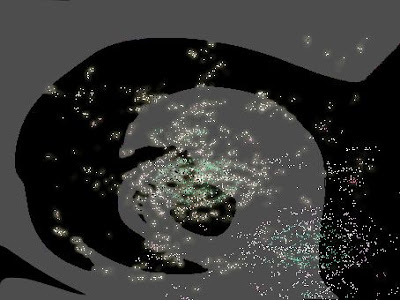
Secondly, if matter could possibly travel through wormholes, light certainly can, but the light emitted will have a characteristic angular intensity distribution. If we were viewing a wormhole's mouth, we would be witness to a circle, resembling a bubble, with intense light radiating from the inside "rim". Looking toward the center, we would notice the light sharply dim. At the center we would notice no light, but we would see right through the mouth of the wormhole and see stars (from our side of the universe) shining straight through.
Source:http://www.universetoday.com/
Plato argued that time is constant - it's life that's the illusion. Galileo shrugged over the philosophy of time and figured out how to plot it on a graph so he could get on with the important physics.
Albert Einstein said that time is just another dimension, a fourth one to go along with the up-down, side-side, forward-back we move through every day. Our understanding of time, Einstein said, is based on its relationship to our environment.
Weirdly, the faster you travel, the slower time moves. (Is it truely weird? Not quite!!) The most radical interpretation of his theory: Past, present, and future are merely figments of our imagination, constructs built by our brains so that everything doesn't seem to happen at once.
Source: http://www.socialtext.net/


No comments:
Post a Comment