



SPEECH BY AL GORE ON THE ACCEPTANCE OF THE NOBEL PEACE PRIZE DECEMBER 10, 2007 OSLO, NORWAY (Source: http://blog.algore.com/)
Your Majesties, Your Royal Highnesses, Honorable members of the Norwegian Nobel Committee, Excellencies, Ladies and gentlemen.
I have a purpose here today. It is a purpose I have tried to serve for many years. I have prayed that God would show me a way to accomplish it.
Sometimes, without warning, the future knocks on our door with a precious and painful vision of what might be. One hundred and nineteen years ago, a wealthy inventor read his own obituary, mistakenly published years before his death.
Wrongly believing the inventor had just died, a newspaper printed a harsh judgment of his life’s work, unfairly labeling him “The Merchant of Death” because of his invention – dynamite. Shaken by this condemnation, the inventor made a fateful choice to serve the cause of peace.
Seven years later, Alfred Nobel created this prize and the others that bear his name.
Seven years ago tomorrow, I read my own political obituary in a judgment that seemed to me harsh and mistaken – if not premature. But that unwelcome verdict also brought a precious if painful gift: an opportunity to search for fresh new ways to serve my purpose.
Unexpectedly, that quest has brought me here. Even though I fear my words cannot match this moment, I pray what I am feeling in my heart will be communicated clearly enough that those who hear me will say, “We must act.”
The distinguished scientists with whom it is the greatest honor of my life to share this award have laid before us a choice between two different futures – a choice that to my ears echoes the words of an ancient prophet: “Life or death, blessings or curses. Therefore, choose life, that both thou and thy seed may live.”
We, the human species, are confronting a planetary emergency – a threat to the survival of our civilization that is gathering ominous and destructive potential even as we gather here. But there is hopeful news as well: we have the ability to solve this crisis and avoid the worst – though not all – of its consequences, if we act boldly, decisively and quickly.
However, despite a growing number of honorable exceptions, too many of the world's leaders are still best described in the words Winston Churchill applied to those who ignored Adolf Hitler's threat: “They go on in strange paradox, decided only to be undecided, resolved to be irresolute, adamant for drift, solid for fluidity, all powerful to be impotent.”
So today, we dumped another 70 million tons of global-warming pollution into the thin shell of atmosphere surrounding our planet, as if it were an open sewer. And tomorrow, we will dump a slightly larger amount, with the cumulative concentrations now trapping more and more heat from the sun.
As a result, the earth has a fever. And the fever is rising. The experts have told us it is not a passing affliction that will heal by itself. We asked for a second opinion. And a third. And a fourth. And the consistent conclusion, restated with increasing alarm, is that something basic is wrong.
We are what is wrong, and we must make it right.
Last September 21, as the Northern Hemisphere tilted away from the sun, scientists reported with unprecedented distress that the North Polar ice cap is “falling off a cliff.” One study estimated that it could be completely gone during summer in less than 22 years. Another new study, to be presented by U.S. Navy researchers later this week, warns it could happen in as little as 7 years.
Seven years from now.
In the last few months, it has been harder and harder to misinterpret the signs that our world is spinning out of kilter. Major cities in North and South America, Asia and Australia are nearly out of water due to massive droughts and melting glaciers. Desperate farmers are losing their livelihoods. Peoples in the frozen Arctic and on low-lying Pacific islands are planning evacuations of places they have long called home. Unprecedented wildfires have forced a half million people from their homes in one country and caused a national emergency that almost brought down the government in another. Climate refugees have migrated into areas already inhabited by people with different cultures, religions, and traditions, increasing the potential for conflict. Stronger storms in the Pacific and Atlantic have threatened whole cities. Millions have been displaced by massive flooding in South Asia, Mexico, and 18 countries in Africa. As temperature extremes have increased, tens of thousands have lost their lives. We are recklessly burning and clearing our forests and driving more and more species into extinction. The very web of life on which we depend is being ripped and frayed.
We never intended to cause all this destruction, just as Alfred Nobel never intended that dynamite be used for waging war. He had hoped his invention would promote human progress. We shared that same worthy goal when we began burning massive quantities of coal, then oil and methane.
Even in Nobel's time, there were a few warnings of the likely consequences. One of the very first winners of the Prize in chemistry worried that, “We are evaporating our coal mines into the air.” After performing 10,000 equations by hand, Svante Arrhenius calculated that the earth's average temperature would increase by many degrees if we doubled the amount of CO2 in the atmosphere.
Seventy years later, my teacher, Roger Revelle, and his colleague, Dave Keeling, began to precisely document the increasing CO2 levels day by day.
But unlike most other forms of pollution, CO2 is invisible, tasteless, and odorless -- which has helped keep the truth about what it is doing to our climate out of sight and out of mind. Moreover, the catastrophe now threatening us is unprecedented – and we often confuse the unprecedented with the improbable.
We also find it hard to imagine making the massive changes that are now necessary to solve the crisis. And when large truths are genuinely inconvenient, whole societies can, at least for a time, ignore them. Yet as George Orwell reminds us: “Sooner or later a false belief bumps up against solid reality, usually on a battlefield.”
In the years since this prize was first awarded, the entire relationship between humankind and the earth has been radically transformed. And still, we have remained largely oblivious to the impact of our cumulative actions.
Indeed, without realizing it, we have begun to wage war on the earth itself. Now, we and the earth's climate are locked in a relationship familiar to war planners: "Mutually assured destruction."
More than two decades ago, scientists calculated that nuclear war could throw so much debris and smoke into the air that it would block life-giving sunlight from our atmosphere, causing a "nuclear winter." Their eloquent warnings here in Oslo helped galvanize the world's resolve to halt the nuclear arms race.
Now science is warning us that if we do not quickly reduce the global warming pollution that is trapping so much of the heat our planet normally radiates back out of the atmosphere, we are in danger of creating a permanent “carbon summer.”
As the American poet Robert Frost wrote, “Some say the world will end in fire; some say in ice.” Either, he notes, “would suffice.”
But neither need be our fate. It is time to make peace with the planet.
We must quickly mobilize our civilization with the urgency and resolve that has previously been seen only when nations mobilized for war. These prior struggles for survival were won when leaders found words at the 11th hour that released a mighty surge of courage, hope and readiness to sacrifice for a protracted and mortal challenge.
These were not comforting and misleading assurances that the threat was not real or imminent; that it would affect others but not ourselves; that ordinary life might be lived even in the presence of extraordinary threat; that Providence could be trusted to do for us what we would not do for ourselves.
No, these were calls to come to the defense of the common future. They were calls upon the courage, generosity and strength of entire peoples, citizens of every class and condition who were ready to stand against the threat once asked to do so. Our enemies in those times calculated that free people would not rise to the challenge; they were, of course, catastrophically wrong.
Now comes the threat of climate crisis – a threat that is real, rising, imminent, and universal. Once again, it is the 11th hour. The penalties for ignoring this challenge are immense and growing, and at some near point would be unsustainable and unrecoverable. For now we still have the power to choose our fate, and the remaining question is only this: Have we the will to act vigorously and in time, or will we remain imprisoned by a dangerous illusion?
Mahatma Gandhi awakened the largest democracy on earth and forged a shared resolve with what he called “Satyagraha” – or “truth force.”
In every land, the truth – once known – has the power to set us free.
Truth also has the power to unite us and bridge the distance between “me” and “we,” creating the basis for common effort and shared responsibility.
There is an African proverb that says, “If you want to go quickly, go alone. If you want to go far, go together.” We need to go far, quickly.
We must abandon the conceit that individual, isolated, private actions are the answer. They can and do help. But they will not take us far enough without collective action. At the same time, we must ensure that in mobilizing globally, we do not invite the establishment of ideological conformity and a new lock-step “ism.”
That means adopting principles, values, laws, and treaties that release creativity and initiative at every level of society in multifold responses originating concurrently and spontaneously.
This new consciousness requires expanding the possibilities inherent in all humanity. The innovators who will devise a new way to harness the sun's energy for pennies or invent an engine that's carbon negative may live in Lagos or Mumbai or Montevideo. We must ensure that entrepreneurs and inventors everywhere on the globe have the chance to change the world.
When we unite for a moral purpose that is manifestly good and true, the spiritual energy unleashed can transform us. The generation that defeated fascism throughout the world in the 1940s found, in rising to meet their awesome challenge, that they had gained the moral authority and long-term vision to launch the Marshall Plan, the United Nations, and a new level of global cooperation and foresight that unified Europe and facilitated the emergence of democracy and prosperity in Germany, Japan, Italy and much of the world. One of their visionary leaders said, “It is time we steered by the stars and not by the lights of every passing ship.”
In the last year of that war, you gave the Peace Prize to a man from my hometown of 2000 people, Carthage, Tennessee. Cordell Hull was described by Franklin Roosevelt as the “Father of the United Nations.” He was an inspiration and hero to my own father, who followed Hull in the Congress and the U.S. Senate and in his commitment to world peace and global cooperation.
My parents spoke often of Hull, always in tones of reverence and admiration. Eight weeks ago, when you announced this prize, the deepest emotion I felt was when I saw the headline in my hometown paper that simply noted I had won the same prize that Cordell Hull had won. In that moment, I knew what my father and mother would have felt were they alive.
Just as Hull’s generation found moral authority in rising to solve the world crisis caused by fascism, so too can we find our greatest opportunity in rising to solve the climate crisis. In the Kanji characters used in both Chinese and Japanese, “crisis” is written with two symbols, the first meaning “danger,” the second “opportunity.”
By facing and removing the danger of the climate crisis, we have the opportunity to gain the moral authority and vision to vastly increase our own capacity to solve other crises that have been too long ignored.
We must understand the connections between the climate crisis and the afflictions of poverty, hunger, HIV-Aids and other pandemics. As these problems are linked, so too must be their solutions. We must begin by making the common rescue of the global environment the central organizing principle of the world community.
Fifteen years ago, I made that case at the “Earth Summit” in Rio de Janeiro. Ten years ago, I presented it in Kyoto. This week, I will urge the delegates in Bali to adopt a bold mandate for a treaty that establishes a universal global cap on emissions and uses the market in emissions trading to efficiently allocate resources to the most effective opportunities for speedy reductions.
This treaty should be ratified and brought into effect everywhere in the world by the beginning of 2010 – two years sooner than presently contemplated. The pace of our response must be accelerated to match the accelerating pace of the crisis itself.
Heads of state should meet early next year to review what was accomplished in Bali and take personal responsibility for addressing this crisis. It is not unreasonable to ask, given the gravity of our circumstances, that these heads of state meet every three months until the treaty is completed.
We also need a moratorium on the construction of any new generating facility that burns coal without the capacity to safely trap and store carbon dioxide.
And most important of all, we need to put a price on carbon -- with a CO2 tax that is then rebated back to the people, progressively, according to the laws of each nation, in ways that shift the burden of taxation from employment to pollution. This is by far the most effective and simplest way to accelerate solutions to this crisis.
The world needs an alliance – especially of those nations that weigh heaviest in the scales where earth is in the balance. I salute Europe and Japan for the steps they’ve taken in recent years to meet the challenge, and the new government in Australia, which has made solving the climate crisis its first priority.
But the outcome will be decisively influenced by two nations that are now failing to do enough: the United States and China. While India is also growing fast in importance, it should be absolutely clear that it is the two largest CO2 emitters — most of all, my own country –– that will need to make the boldest moves, or stand accountable before history for their failure to act.
Both countries should stop using the other’s behavior as an excuse for stalemate and instead develop an agenda for mutual survival in a shared global environment.
These are the last few years of decision, but they can be the first years of a bright and hopeful future if we do what we must. No one should believe a solution will be found without effort, without cost, without change. Let us acknowledge that if we wish to redeem squandered time and speak again with moral authority, then these are the hard truths:
The way ahead is difficult. The outer boundary of what we currently believe is feasible is still far short of what we actually must do. Moreover, between here and there, across the unknown, falls the shadow.
That is just another way of saying that we have to expand the boundaries of what is possible. In the words of the Spanish poet, Antonio Machado, “Pathwalker, there is no path. You must make the path as you walk.”
We are standing at the most fateful fork in that path. So I want to end as I began, with a vision of two futures – each a palpable possibility – and with a prayer that we will see with vivid clarity the necessity of choosing between those two futures, and the urgency of making the right choice now.
The great Norwegian playwright, Henrik Ibsen, wrote, “One of these days, the younger generation will come knocking at my door.”
The future is knocking at our door right now. Make no mistake, the next generation will ask us one of two questions. Either they will ask: “What were you thinking; why didn't you act?”
Or they will ask instead: “How did you find the moral courage to rise and successfully resolve a crisis that so many said was impossible to solve?”
We have everything we need to get started, save perhaps political will, but political will is a renewable resource.
So let us renew it, and say together: “We have a purpose. We are many. For this purpose we will rise, and we will act.”
Ecological Homeostasis
Are We Short of Water and Food ??
- Meteorite Asteroid Impact On Earth Doomsday 2012
- Nasa Climate Report
- Dr. Rajendra Pachauri, Chief of UN IPCC on a Win-Win Situation for the Planet: Go Vegetarian!
- 20 Questions About Vegetarianism
...Excess protein consumption can cause a variety of problems including bone mineral loss, kidney damage, and dehydration. Your body can only use so much protein, the excess is either broken down through oxidization, placing an enormous strain on the kidneys, or it is stored as body fat. Neither option is particularly desirable...
 http://www.lovinghut.com/
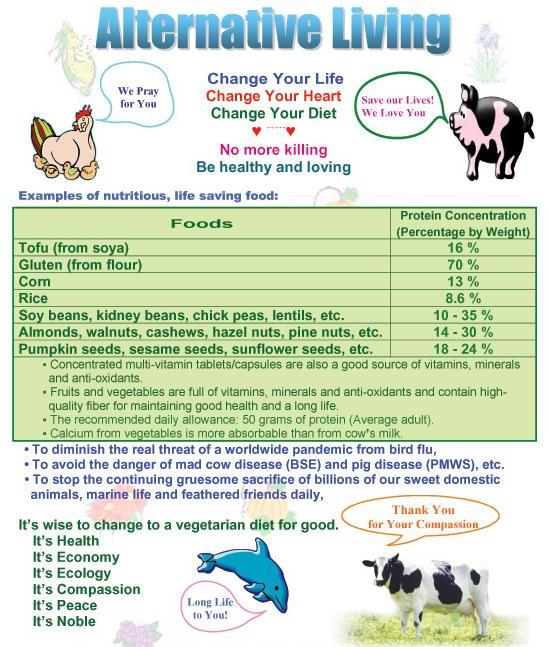
Since the vegetarian diet is the most effective solution to global warming, under Supreme Master Ching Hai's guidance, members of The Supreme Master Ching Hai International Association recently opened a chain of Loving Hut vegetarian restaurants around the world, in the United States, Japan, Indonesia, Au Lac and Formosa. These places provide affordable and high-quality vegetarian delicacies to the public, bringing a positive impact on the food and beverage industry...
 Meat or vegetables? Independent online (SA)
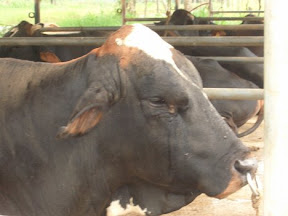
A recent study has revealed that giving up meat could drastically reduce one's carbon footprint. A diet with meat is responsible for producing in a year (as many) greenhouse gases as driving a mid-sized car for 4,758 km, the Institute for Ecological Economy Research (IOeW) said last week. But the food a vegetarian consumes in (the same period of time) is responsible for generating (gases only) as driving for 2,427km, the IOeW said in a study commissioned by independent consumer protection group Foodwatch...
 Vegetarian Shoes And Bags
The term pleather ("plastic leather") is a slang term for synthetic leather made out of plastic, a portmanteau of plastic and leather, the term can be either descriptive, or derogatory, depending upon the user (the derogatory use implies use as a substitute for genuine animal hide leather to cut costs)...
From All Corners of the Galaxy
 Which Stars Are You From?
- Galactic Highway - The Wormhole
- Stream of Time
Wormholes are a valid consequence of Einstein's general relativity view on the universe. A wormhole, in theory, acts as a shortcut or tunnel through space and time. There are several versions on the same theme (i.e. wormholes may link different universes; they may link the two separate locations in the same universe; they may even link black and white holes together), but the physics is similar, wormholes create a link two locations in space-time, bypassing normal three dimensional travel through space. Also, it is theorized, that matter can travel through some wormholes fuelling sci-fi stories like in the film Stargate or Star Trek: Deep Space Nine.
If wormholes do exist however, it is highly unlikely that you'll find a handy key to open the mouth of a wormhole in your back yard, they are likely to be very elusive and you'll probably need some specialist equipment to travel through them (although this will be virtually impossible).
Alexander Shatskiy, from the Lebedev Physical Institute in Moscow, has an idea how these wormholes may be observed. For a start, they can be distinguished from black holes, as wormhole mouths do not have an event horizon.
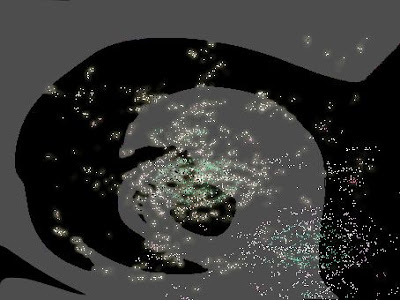
Secondly, if matter could possibly travel through wormholes, light certainly can, but the light emitted will have a characteristic angular intensity distribution. If we were viewing a wormhole's mouth, we would be witness to a circle, resembling a bubble, with intense light radiating from the inside "rim". Looking toward the center, we would notice the light sharply dim. At the center we would notice no light, but we would see right through the mouth of the wormhole and see stars (from our side of the universe) shining straight through.
Source:http://www.universetoday.com/
Plato argued that time is constant - it's life that's the illusion. Galileo shrugged over the philosophy of time and figured out how to plot it on a graph so he could get on with the important physics.
Albert Einstein said that time is just another dimension, a fourth one to go along with the up-down, side-side, forward-back we move through every day. Our understanding of time, Einstein said, is based on its relationship to our environment.
Weirdly, the faster you travel, the slower time moves. (Is it truely weird? Not quite!!) The most radical interpretation of his theory: Past, present, and future are merely figments of our imagination, constructs built by our brains so that everything doesn't seem to happen at once.
Source: http://www.socialtext.net/


No comments:
Post a Comment